The Trust Anchor: Why C2PA "Content Credentials" Are the New SSL for SEO

Arpit Dhaduk
Digital Strategy
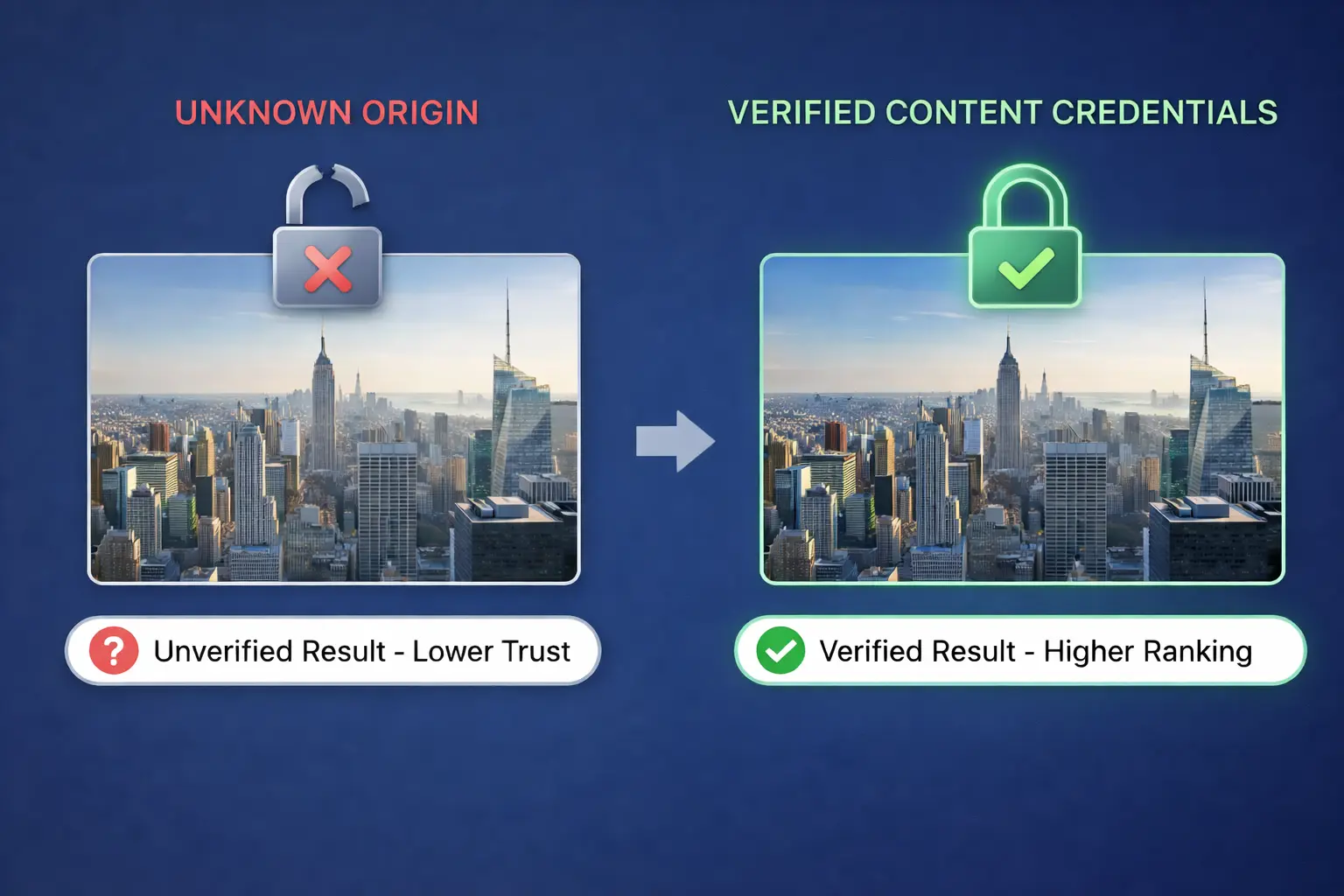
The Era of "Verified" Search Results is Here
For the last decade, we lived by the mantra "Content is King." But in an age where Generative AI can produce infinite content in milliseconds, the crown is shifting. The new King is Provenance.
Google has quietly begun integrating C2PA (Coalition for Content Provenance and Authenticity) standards into its ranking logic. Much like how HTTPS became a mandatory signal for security, Content Credentials are becoming the mandatory signal for trust.
At ThynkUnicorn, we believe this is the most critical technical SEO shift since Core Web Vitals. Here is what you need to know.
What is C2PA?
Think of C2PA as a "digital nutrition label" that is cryptographically sealed into your image or video files. It tells the search engine:
1. Who created this asset.
2. How it was created (e.g., captured on a Pixel 10, edited in Adobe Photoshop).
3. If AI was used to alter it.
This isn't just metadata; it's a tamper-evident chain of custody from the camera lens to the search result page.
Why This Impacts Your SEO (The E-E-A-T Connection)
Google’s search algorithms are fighting a war against AI-generated spam. To win, they prioritize E-E-A-T (Experience, Expertise, Authoritativeness, Trustworthiness).
The ThynkUnicorn Protocol: How to Prepare
We are moving from a "Creative Workflow" to a "Signed Workflow." Here is the checklist we are implementing, and you should too:
1. Verify Your Hardware/Software: Ensure your photography teams are using hardware that supports cryptographic signing (like the latest Pixel or Sony Alpha series) and software that preserves it (Adobe Content Credentials).
2. Audit Your Compression: Many "lossy" image compression plugins strip metadata to save kilobytes. Stop this immediately for high-value assets. The SEO value of the metadata outweighs the millisecond of load time.
3. Claim Your Credit: Use the C2PA standard to permanently embed your brand’s attribution into your infographics. Even if your image is stolen, the "Digital DNA" points back to you.
The Verdict
The internet is becoming a sea of synthetic media. To stand out, you don't just need to be better; you need to be real. Content Credentials are your proof of humanity in a machine-generated world.
Ready to audit your digital trust signals? Contact ThynkUnicorn today.